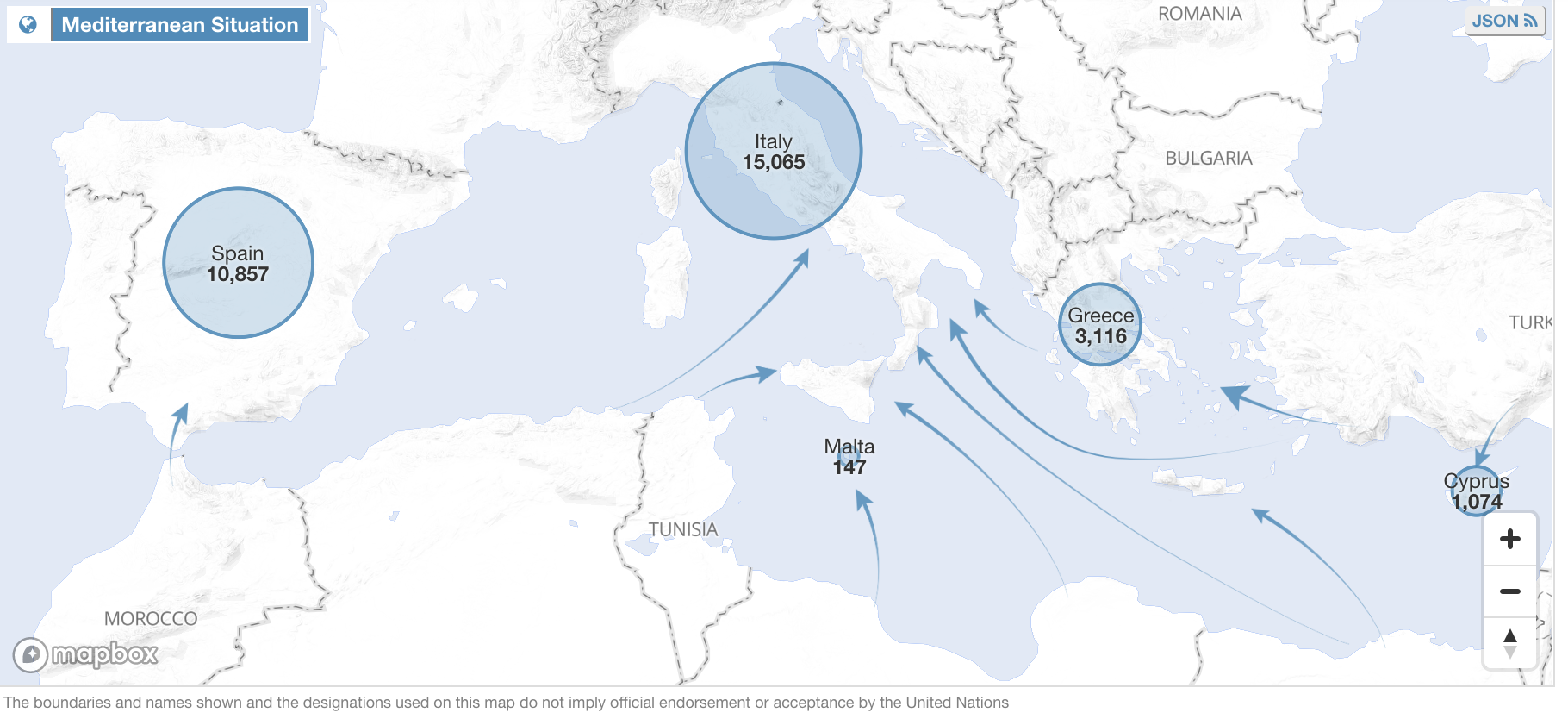
Asylum seekers arriving in Malta tell UNHCR that they had to pay to be released from a Benghazi prison, only to be held in captivity and forced onto an overcrowded boat with little food and water.
The asylum seekers told UNHCR Malta this week that Libyan smugglers gave them food and water for just two days, with many fearing the worst when on the fifth day their engine broke down.
"We commend the AFM for this major rescue effort and for ensuring the safety of persons on board, which include a number of women and children,” UNHCR said in a statement following an operation involving aircraft and several coast guard vessels.
The new arrivals are held in two detention centres in Malta pending the Maltese authorities’ assessment of their claims. In recent days some of them have spoken to UNHCR Malta staff about the difficult situation sub Saharan nationals face in the ‘new’ Libya. “It is not safe. If you have a darker skin, they will catch you and put you in prison,” they said.
|
“Some people approached us in prison and asked money for us to be released and go by boat to Europe. There was no choice; that is the only way to be free" |
This grim reality is reflected in a recent Amnesty International report, based on fact-finding visits to Libya between May and September 2012, reiterating that “undocumented foreign nationals in Libya are at risk of exploitation, arbitrary and indefinite detention, as well as beatings, sometimes amounting to torture.”
The asylum seekers arriving in Malta this week had all been subject to imprisonment in Benghazi. “Some people approached us in prison and asked money for us to be released and go by boat to Europe. There was no choice; that is the only way to be free", one asylum seeker told UNHCR. “If we did not behave they would have beaten us, and left us in prison.”
After paying for release from the prison, the group was held by an armed group for several months in a small compound outside the city of Benghazi. “It was overcrowded and terrible conditions, especially for the children. People were sleeping outside on mattresses because there was no space inside,” an asylum seeker recounted. Day and night they could hear firearms, people shooting in the air. One of the men showed us his wounded arm, hit by a stray bullet.
UNHCR Malta staff were told accounts of violence and abuse. One woman was reported to have died in the compound outside Benghazi: “She was very sick. We told the armed men that she needed medicine and a doctor but they would not let her go. She died there.”
"We are gravely concerned that armed groups in Libya continue to exploit vulnerable asylum-seekers who are pushed to risk their lives to seek safety elsewhere," Jon Hoisaeter, UNHCR Representative to Malta said.